Monday, July 1, 2024

A Common Man's Doublet

©Travis Abe-Thomas, June 2024

Finally!  I actually finished another project, and in time to debut the suit at the second ever West Kingdom Crown hosted by Oertha.  This is the white hemp canvas doublet I have been plugging away at for the last two years, to be paired with the black wool round hose as a "working" suit which would age and develop what we're going to call "character"...also known as stains and hopefully wear patterns.

When designing the project, I knew I wanted a fairly simple outfit from the end of Elizabeth's reign--round hose, and a fairly plain doublet.  As working class people aren't the most popular subject for art (unless accompanied by quaint villages and beautiful scenery as in my Low Countries Research), I eventually found what I was looking for in Samuel Pepys's Cries of London.  

Sunday, June 30, 2024

Demystifying Documentation; How to Infodump with (some) Organization


Full Notes for the Class, taught June 22, 2024, West June Crown A.S.59

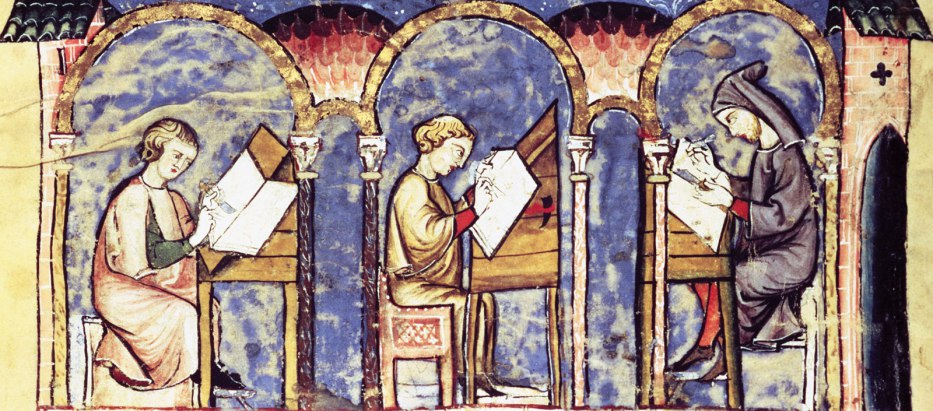
From Biblioteca de San Lorenzo de El Escorial, Madrid, Spain, c. 14th century AD

About a month ago during a conversation her (current) Highness of Oertha, Mistress Elena Verch Ryse suggested that I actually teach a class on how I do write-ups and documentation for my projects.  I thought about it (getting heavily distracted from my book as I essentially gave the lecture to myself), and decided that yes, this was something I could do and would schedule for West June Crown--a fairly major stepping point for me as I have thus avoided lecture style classes and stuck with more hands on ones where I didn't have to talk as much. 

The class went off with a small handful of brave souls--not as many as I would have liked, although there were two other classes going on at the same time, as well as something called "dinner".  As though a meal is needed after grazing all day... Still, it was a good class and we mostly stayed on topic, with a bit of perusing my library after. These are the class notes with everything I remember discussing; while my outline has been published before on this blog, I didn't discuss my theories in depth at all.  This particular class does not focus primarily on writing for competitions as most articles on the topic seam to, but more for writing to document it for your own personal gratification and to educate those who come after.

Sunday, June 9, 2024

Peasant Fashion in the Low Countries: Stage 2; Frans Boels

Frans Boels, B. 1555 - 1596, most of his paintings are of the landscape variety, often with Biblical scenes.  He was trained by Hans Bol, his stepfather.  As such, only a handful are of use for this project.  However, as the paintings are accurately dated for the most part, they are particularly useful as they likely show /current/ fashion in the peasant class for the 1590s, unlike the more romanticized versions by the Brueghels for instance. 

Monday, May 27, 2024

Peasant Fashion in the Low Countries: Stage 2; Frans Verbeeck

Aaah, Frans Verbeeck, born 1510 and died 1570.  Or at least his studio/family, since we don't know in most cases as to which Frans Verbeeck, and it wasn't uncommon for their paintings to be unsigned.  Their style is...unique, although likely inspired by Heironymus Bosch, and have similar forms of exaggeration and satire.  Even so, not all of it is useless for this survey.  I am not a fan of the artistic style, tbh.

Sunday, April 7, 2024

GUEST POST: Preservation of Leather Artifacts in Archaeology

That's right...a rare guest post on Matsukaze workshops; my Apprentice's partner wrote out this gem, and I offered to host it until (and if) he creates his own webpage, as it's useful and well written information--plus it's far easier to share a webpage than a document.  Factors for preservation for organic materials is something which I have regularly needed to reference when recreating or discussing archaeological finds.
        Maistre Bran


Preservation of Leather Artifacts in Archaeology

Leather artifacts bear crucial information on past civilizations, craftsmanship, the norms of society, and daily life. However, organic materials, mainly leather, are prone to several problems that hinder their preservation at archaeological sites due to their sensitivity to environmental conditions. The scarcity of preserved leather at archaeological sites poses enormous challenges to historians and conservators. This scarcity is not by chance, but by a combination of environmental conditions, including the composition of the soils, moisture levels, and the practices of burying artifacts. This study will explore some of the factors controlling leather preservation at different archaeological sites. It will give insight as to why leather items survive across the timeline versus other perishable materials. This study reinforces these factors as the best-understood contribution of environmental and human influences to archaeological survival by comparing extant examples from the Birka, York, and Vindolanda archaeological sites. Through this research, we aim to shed light on the complexity of ancient leather conservation, which will be the first stage in a journey to acknowledge the selective nature of leather discoveries.

Peasant Fashion in the Low Countries: Stage 2. Joachim Beuckelaer

Next up is Joachim Beuckelaer, born 1533, d. 1574, and most active through the 1560s.  His artwork focuses on markets; meat, poultry, fish, and veggies, and this can show an insight into some of the tools of those various trades as well as different foodstuffs in Antwerp.  He was a nephew of and possibly learned to paint from Pieter Aiertsen, who was the first artist on my list; I think you can definitely see some stylistic similarities between the two.

Wednesday, February 28, 2024

Peasant Fashion in the Low Countries: Stage 2; Pieter Bruegel the YOUNGER

 Pieter Bruegel the Younger was born 1564 in Brussels as the oldest son of Brueghel the Elder.  Despite being the son of a famous painter and copying his fathers work, he was not directly trained by him, as Brueghel Elder died when Younger was only 4-5 years old.

The usefulness of his work for this survey varies, like that of most artists; much of his opus is out of period and shows it, others are direct copies of his father's work and was covered when I analyzed Elder's paintings (others of these are survived where Elder's original did not), and, of course, others are allegorical and just too funky for inclusion.  Additionally, he produced /many/ copies from his shop, some of which are referred to as different names--several times I managed to dig up a painting I thought was new only to find I had already covered it.  Often, they are undated and I have to guesstimate the period they're showing--when I go and finally get to do posts regarding individual garments, I will attempt to chart a timeline of style development. 

I decided this time to include my additional commentary from the Facebook posts I have been making daily; while there isn't much focused interest in those and I don't discuss them much, I figure it could help people searching for examples of random items in these paintings.

Saturday, February 17, 2024

Ten Years of Matsukaze Workshops

    This will probably be a relatively short post but....Valentine's Day was my 10 year anniversary of the Matsukaze Workshops blog.  As such, I wanted to try talking about some of what I learned, and go over some of my most popular posts of all time.  As well as some of the ones I am most proud of (the two aren't necessarily the same), and what needs work. 

Sorry about the white edges...it wouldn't let me edit those out for some reason.

Monday, February 12, 2024

Peasant Fashion in the Low Countries: Part Two. Pieter Bruegel the Elder

Pieter Bruegel the Elder.  One of the first artists who come to mind when you think of this genre of painting, and the one this project was named for.  He was born between 1525 and 1530 near Breda and died in 1569, after living primarily in Antwerp then Brussels.  His early work is mostly in engraving and drawings, with the majority of his well known paintings came after 1555.


  • Parable of the Sower.  1557.  https://www.wikiart.org/en/pieter-bruegel-the-elder/parable-of-the-sower-1557 
    • Only guy
      • Hat is black and mostly shapeless, although there does appear to be some kind of brim.
      • Outer garment is grey and only hip length.  Sleeves are rather poofy, with a separate closer fitting pieces at the forearm.  In the left (as worn) sleeve, you can see a slit.  The garment may be lined in red, and may have a crossover front.  
      • Doublet, not really visible, except as more grey.
      • Hosen are of the knee length breeches style in a lighter shade of grey.   No details are visible as to whether there is a codpiece or not.
      • Netherstocks are a grey inbetween the breeches and jerkin in colour.  You can see slight bagging at the ankle.
      • Shoes are low, and slip on, but do enclose the foot completely.  Leather is black.
      • He is clean shaven, and short haired...and appears to be black.  There may be sideburns going on, but I am not sure.

Saturday, July 22, 2023

A Procrastinated Pair of Round Hose

    Some years ago, in the Pre-Covid times, I decided I wanted to make a plain suit of Elizabethans.  Something from the very end of Elizabeth's reign, and suitable for working in; setting up tents, fighting, maybe some hiking, sitting in the tavern, etc.  A suit of late period clothing where getting it dirty would only add to the character of the garments rather than spoiling them.  In the end, I settled on a suit of round hose in wool broadcloth, and a doublet in another broadcloth or hemp/linen canvas.  While the doublet is still in the works (but is actually being worked on!), I actually finished the round hose over a year ago; I just haven't had any motivation to write (acquiring a new, functional computer helped a bit, but that was purchased *mumble* months ago...).  Wish me luck on this...I'm well out of practice on writing at all, never mind project documentation; thankfully, I took a fair amount of notes...but not enough.

    The hose are, as said, made in common man's cloths and suitable for the tail end of the 1500s and into the 1600s..  Finding exemplars was more difficult than the norm for this period, as working class people aren't particularly popular subjects of paintings, and I additionally had a particular look in my head.  In the end, the Samuel Pepys's Cries of London was a major resource and inspiration for both the hose and doublet forms.

    The Cries of London is a particular genre of artwork which often dealt with the lower classes of various cities (e.g London, Bologna).  The term allegedly comes from the "Cries" or calls of the various traders as they tried to attract customers [Payne, abstract].  In the case of the examples collected by Samuel Pepys, the collection we know as gathered up to 100 years after publishing.  The actual artist of these is unknown, as is the original date, although based on fashion style I estimate this example is from last quarter of the 16th century.

From Spitalfields Life Blog

Tuesday, January 28, 2020

A Wild Irish(wo)man's Inar

A couple of months ago, my Donna and Pelican was asked to join the Order of Defense, the peerage for fencers in the SCA.

As she had nothing nice to wear for her elevation about 6 weeks later at Winter Coronet, we discussed options, and settled on 16th Century Irish (her Persona and mine) menswear--partly so she could borrow pieces from my wardrobe, and partly because the main outer layer really doesn't require much fabric.  So...I set to procrastinating.  For the better part of a month.  Not a big issue...even with handsewing an inar doesn't take much time, since there really aren't a lot of seams.

Photo by Twobears Photography
However, since it was for a special occasion I wanted the garment to be bling, and elected to try to keep my doing so a secret except from select support crew who were sewn to secrecy. 

Wednesday, October 16, 2019

Leather Party Pluderhose: The Documentation

The party pluderhose is a project I had been thinking about for some time--I wanted a pair of pluderhose which were a bit more durable, and which I actually handsewed (the Brunswick suit was machine sewn, if with a considerable amount of handwork).

Once again, I have a love/hate relationship with this garment--they are so extra that I love them, along with the challenge of drafting them.  On the other hand, they have a lot of material in them so are not particularly lightweight to wear, and do require the wearing of stockings.  Also, while period codpieces only had two points holding them up, because I make most of my late period gear for SCA fencing, it needs to be more secure than that--and tying those fiddly little points with cold hands is a nuisance.

This is the full documentation, which covers just about every step of my design, construction, and decisions.  If you just want to look at the photo shoot and read an overview, click here for my previous post. 

Wednesday, September 18, 2019

A Brief Discussion on Men's Stays


Corsets, stays, posture improvers, health belts....these are a few of the various terms for what I am discussing in this long awaited article.  Each may be slightly different, but all have the effect of narrowing the waist (or containing it, in the case of King George IV), assisting or forcing better posture, or helping support the back much like a modern weightlifting belt does.  In this article, I will be showing a variety of styles from different periods, and discussing them a little. I am /not/ looking deep into the extreme of tight lacing, or all the caricatures of Dandyism which are focused on by other articles, although I will touch briefly on them.  These phenomena existed--there is no doubt about that, given the prevalence of mocking them--but my topic is more the common (if a bit vain) man who needed a bit of help with the fashionable shape, or wore one for back support.

The Invicorator Belt for Men,
1893 English advertisement.

Tuesday, September 10, 2019

I knitted a...a...

...Well, I scalped a muppet.  And it was glorious...the prickly thing put up a fight, but in the end I was triumphant!

The one I made for myself, on it's debut expedition for mushrooms.
About a year or so ago I picked up knitting as something to work on during down time at my day job.  I started with a couple of scarfs--the first 4th Doctor inspired Ravenpuff scarf taking all winter, then went on to a couple of hats.  Specifically, a thrum hat.

Tuesday, September 3, 2019

A Norfolk Jacket for Cycling

Back in April, late one night I decided I needed a cycling jacket--I started doing most of my commuting and errands on two wheels back at the beginning of December, and having to wear a Carhart jacket for warmth was just killing me.  Not a look I like, and not designed for cycling, either.  I also had issues in that it was way too warm for anything above 20*F, never mind rainy weather--I would get soaked both from sweat and the precipitation.

More photos of it being worn towards the bottom
of the post.
And safety first, even when just getting photos!

Thursday, August 29, 2019

A Work-a-Day Elizabethan Shirt

Well...mostly work a day.  This project was intended to be just a shirt to wear under my late period wear; one which does /not/ have silk insertion seams as the last shirt I made does.  Even though the silk sewn shirt is fairly heavy and should be durable, my brain won't let me abuse and get it dirty as I probably will with this one.   This project was completed a good six months ago, and took about nine months of procrastinating to finish--there is a certain amount of guesswork since I wasn't doing a good job of journaling my projects during that time.

Wearing the pluderhose from my Brunswick Suit for the photos.

Tuesday, August 6, 2019

Party Pluderhose (and Chocolate doublet): The Overview and Photoshoot

About fifteen months or sew ago, I decided I really wanted to make a pair of leather pluderhose.  Something exaggerated, slightly shocking, but subdued in colours.  Something which would be relatively comfortable, and suitable for both rapier combat, as well as the bardic and partying afterward. And for court, I suppose.

This is what I came up with.

Friday, August 2, 2019

A Pair of Transitional Braies

Alright!  This project has been finished for well over a year, but I haven't actually worn it until recently.  I also had not written any documentation on the subject--or any other projects in the last year or two, for that matter.  I'm well out of practice in writing, and working from scanty notes and memory, so please bear with me.

Introduction:

As I have been working on a 14th century outfit (slowly), and intend to venture into the early 15th century, I needed an actual set of braies instead of the wrapped loincloth style hypothosized over on the Hibernaatiopesäke blog.  While comfortable and of a period form, I didn't feel they would be appropriate for later in the 14th century, never mind the 15th.  Therefore the first part project was to figure out what shape the braies would be, then make a pair which would work for a variety of outfits.

Monday, May 6, 2019

Norfolk Jacket Pockets: A (Brief) Tutorial

When I decided to go from the planned patch pockets on my current jacket project, to ones which were hidden under the decorative pleats of a Norfolk jacket...I had to figure out how to do so, and figure it wouldn't hurt to share here how I did it.

The Cutter's Practical Guide to Jacket Cutting & Making:
Lounges, Reefers, and Patrol Jackets.  by W.D.F. Vincent, 1890s
Page 35, Plate 15

Tuesday, April 30, 2019

A Jacket for Cycling, A Project Journal for April

A couple of weeks ago, at around 10pm, I got a wild hair to start on a new project...I could feel cold and wet in the air (we got 4-5 inches of wet snow that night), so I had a rain jacket on the brain.  Again.  I do every time it rains, go look at commercial examples and discard them because they don't meet my standards of fit and durability--as well as invariably having hoods, which I detest wearing.

Taken this very morning, in fact, as I double checked the sleeve fit.
 So, I went out, found a few yards of medium brown bull denim, and off white wool in my stash--both of which were from the thrift store--and started drafting, first on paper.  Just a rough sketch of the design idea and proportions.